Part D. Resources
D-3. Three Global Agendas
Key aspects of three global agendas relevant to transport and logistics within global supply chains are shown below.
1. Sustainable Development Goals under the 2030 Agenda for Sustainable Development
Target 1.5 Build resilience to environmental, economic and social disasters
By 2030, build the resilience of the poor and those in vulnerable situations and reduce their
exposure and vulnerability to climate- related extreme events and other economic, social and
environmental shocks and disasters.
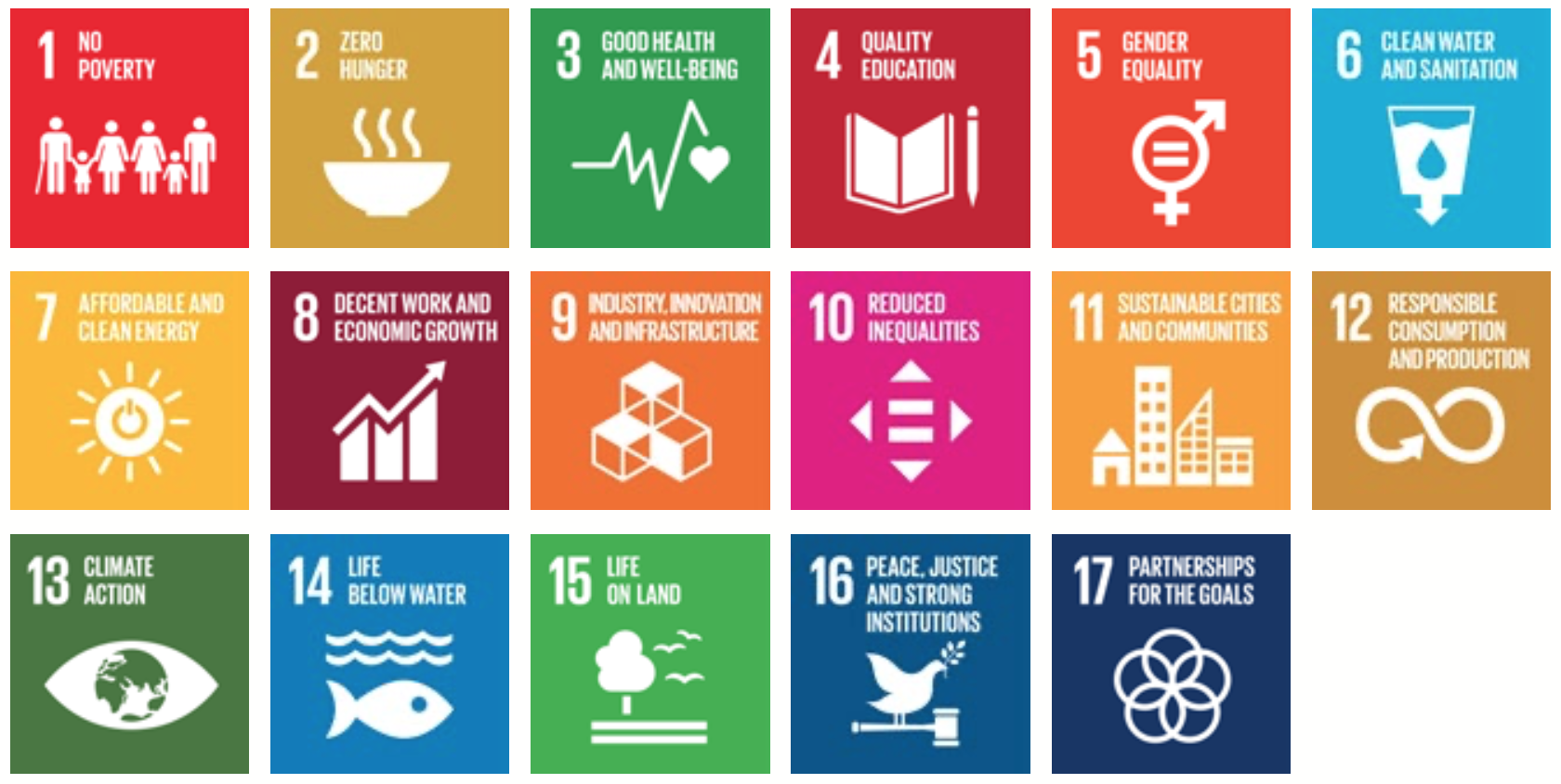
Target 9.1 Develop sustainable, resilient and inclusive infrastructures
Develop quality, reliable, sustainable and resilient infrastructure, including regional and
transborder infrastructure, to support economic development and human well-being, with a focus on
affordable and equitable access for all.
Target 9.6 Facilitate sustainable infrastructure
development for developing countries
Facilitate sustainable and resilient infrastructure development in developing countries through
enhanced financial, technological and technical support to African countries, least developed
countries, landlocked developing countries and small island developing States.
Target 13.1 Strengthen resilience and adaptive capacity
to climate-related disasters
Strengthen resilience and adaptive capacity to climate-related hazards and natural disasters in all
countries.
2. Sharm El-Sheikh Adaptation Agenda35
Six systems:
- Food and agriculture
- Coastal & Ocean
- Water and Natural
- Health
- Human settlements
- Infrastructure

2030 Adaptation outcomes8
Infrastructure systems:
Transport infrastructure is resilient to climate hazards through the adaptation of new technology, design and materials.
Key challenges for transport infrastructure:
-
Very little progress has been made to build resilient transport infrastructure and increase access to mobility for goods and people. An estimated 30% of global rails and roads are currently exposed to extreme flooding and cyclones.
-
Transport and energy are not strongly represented in countries’ planning efforts for adaptation and resilience. Even though 94% of countries include transport in some way in their NDCs, these still mostly relate to decarbonization of transport.
-
There is currently no common taxonomy and supporting metrics, as well as a lack of standards and guidelines, to define, build, and operationalize resilience in the transport sector.
-
Current A&R funding levels for transport fall dramatically short of projected needs, and growth needs to accelerate urgently to ensure climate resilience of transport systems.
-
Workforce availability in general is a major constraint in the construction industry, but a lack of A&R expertise in specific presents a critical constraint.
3. Sendai Framework for Disaster Risk Reduction 2015-203056
Outcome:
Reduced disaster risk and losses in lives, livelihoods and health and all assets of persons, businesses, communities and countries
Goal:
Prevent and reduce existing disaster risk through measures that reduce exposure, increase preparedness for response and recovery, and strengthen resilience
7 Global targets
Reduce:
- Mortality / global population
- Affected people / global population
- Economic loss / global GDP
- Damage to critical infrastructure & disruption of basic services
Increase: 5. Countries with national & local DRR strategies 6. International cooperation to developing countries 7. Availability and access to multi-hazard early warning systems & disaster risk information and assessments
Priorities for action (local, national, regional, global):
- Understanding disaster risk
- Strengthening disaster risk governance to manage disaster risk
- Investing in disaster risk reduction for resilience
- Enhancing disaster preparedness for effective response and to build back better in recovery, rehabilitation and reconstruction
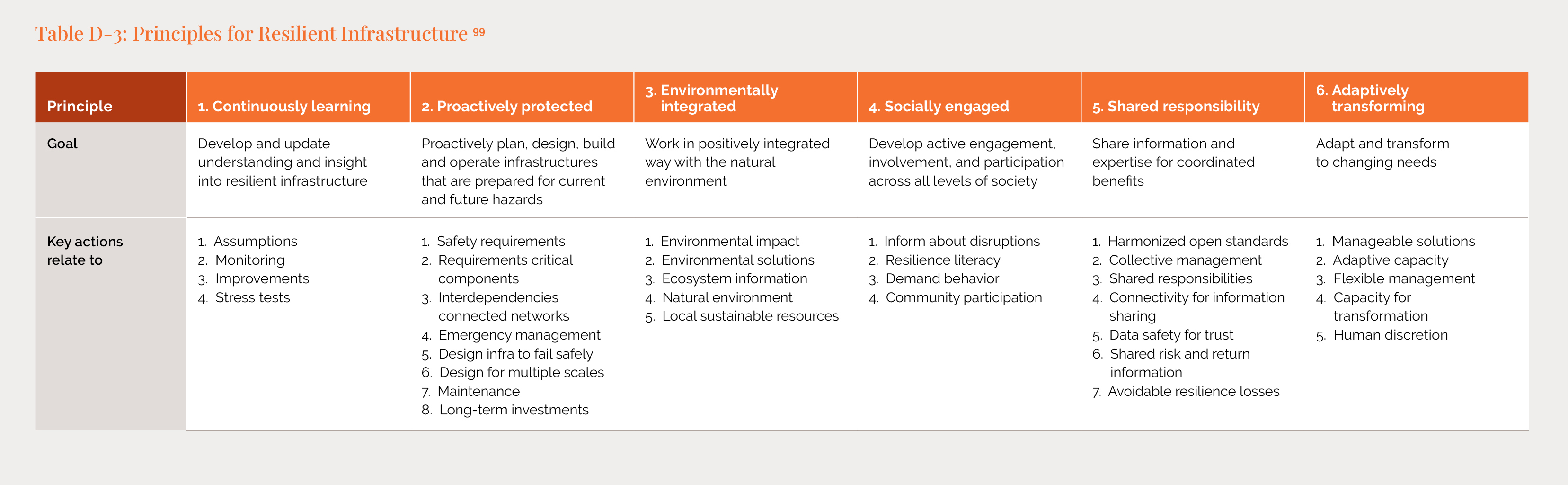
13 Guiding principles & 6 Principles for Resilient Infrastructure
In support of the Sendai Framework, six Principles for Resilient Infrastructure were developed, which also apply to transport and logistics infrastructure. These are summarized in the table below, along with a supporting Handbook for implementation.