Part B. Life-Links Framework
B-3. Framework Structure and How to use it
The framework starts with a preparation step, followed by a three-steps approach: assessing supply chains, selecting appropriate interventions, and agreeing on an implementing plan with partners. Each step has its own outcome, cumulating to a shared resilience in supply chains that delivers real economy benefits.
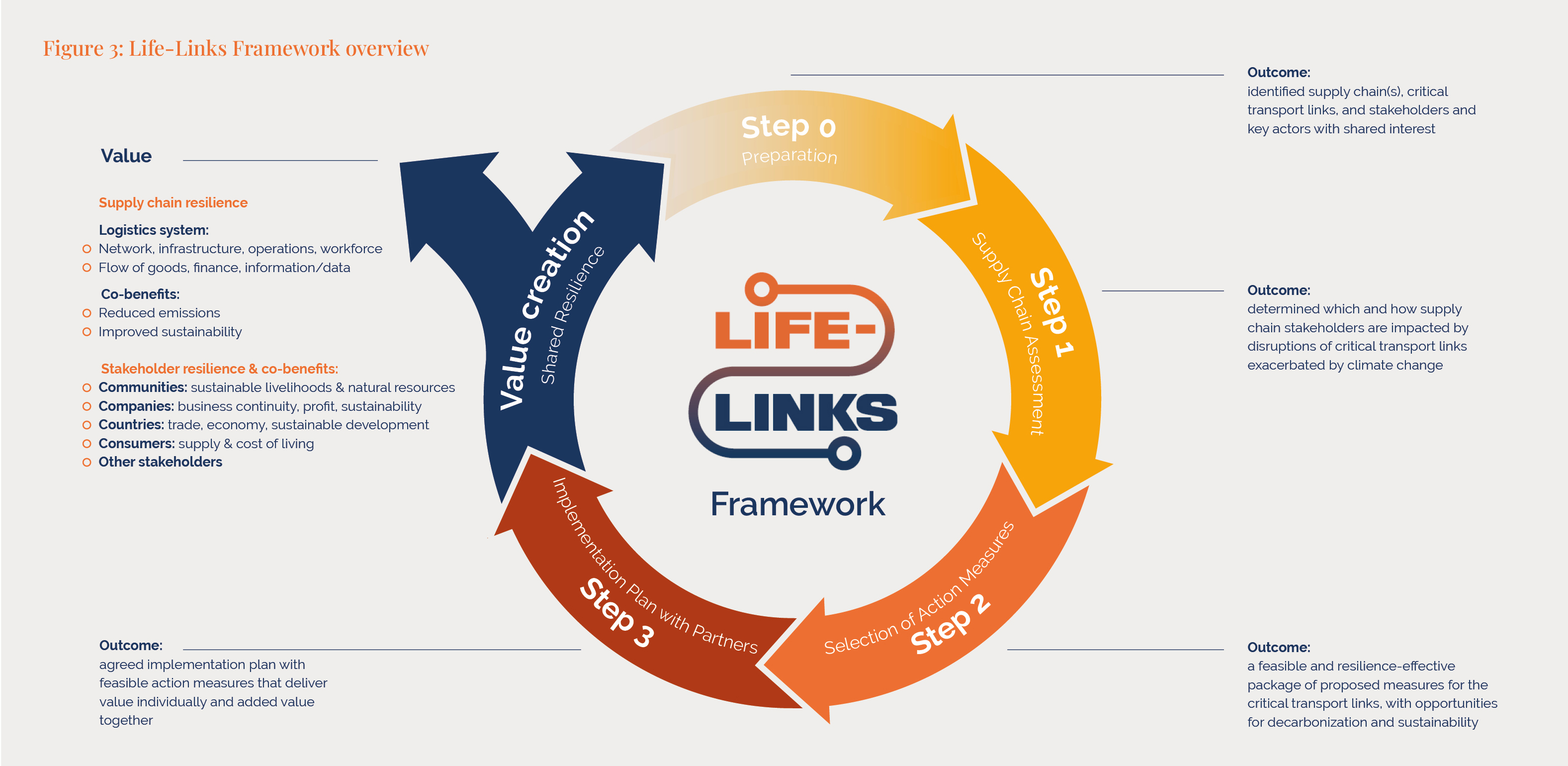
A Life-Links application can be initiated by any partner or stakeholder in the concerned supply chain, or by a supporting organization, who can then bring in other stakeholders.
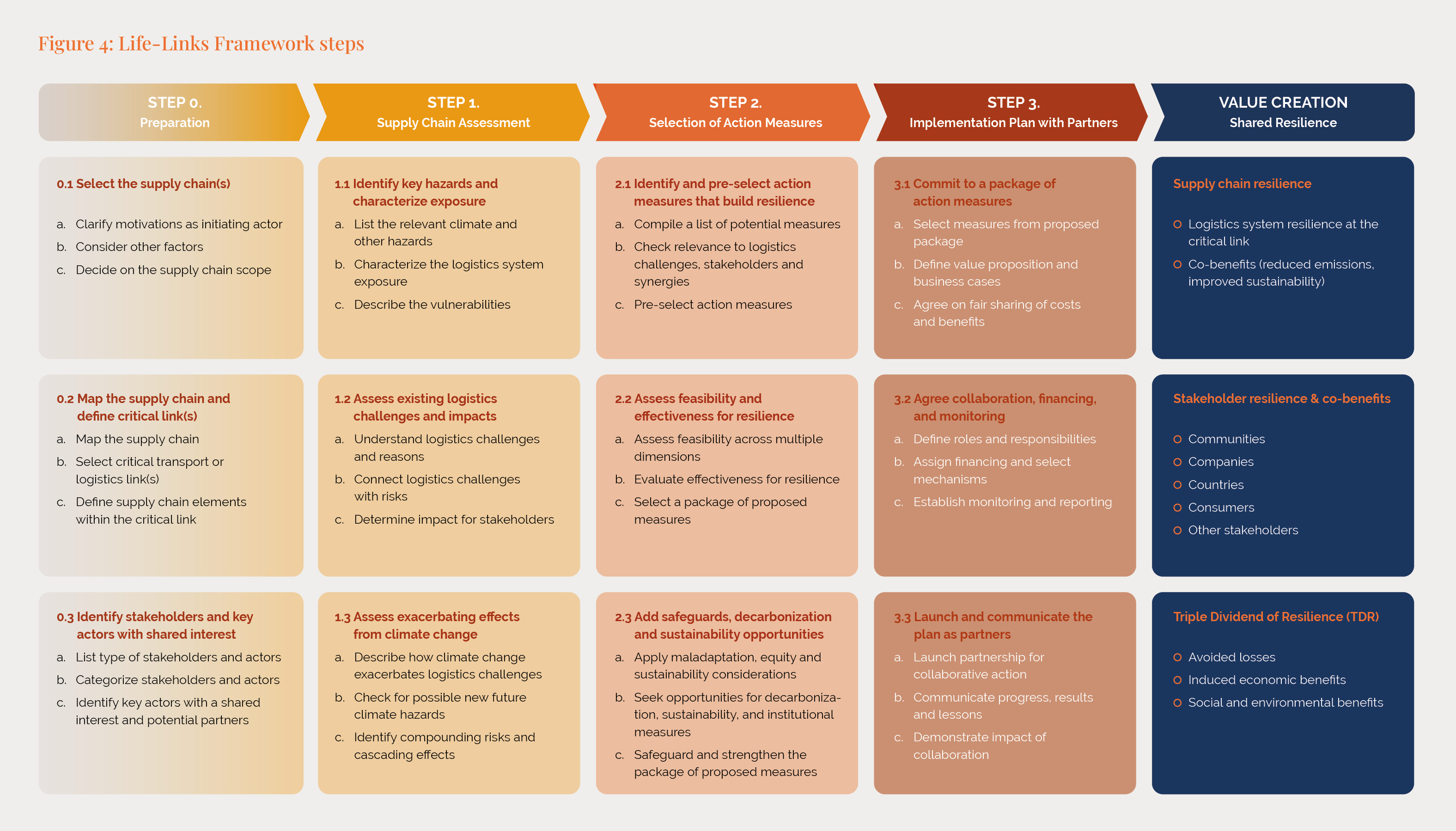
Use Part C of the framework to go through each step (see Figure 4):
- Start with the preparation step to make sure the supply chain, actors and stakeholders and the value they are likely to expect from the project are clear.
- Next, go through the three steps one by one, which are broken up in sub-steps.
- The value of the project for different partners and stakeholders can be assessed after implementation, but is ideally determined at the start and validated as part of the feasibility analysis and the commitment to a package of actions.
Examples are used to give the step more practical meaning, drawing from pilot applications that are already underway in agricultural supply chains connecting East Africa to Europe led by the Kuehne Climate Center, along with other practical examples provided by Life-Links Council members and from guidelines and literature.
 Case Study: First mile resilience of an avocado supply chain from Kenya to Europe
Case Study: First mile resilience for a coffee supply chain from Uganda to Europe
Case Study: First mile resilience of an avocado supply chain from Kenya to Europe
Case Study: First mile resilience for a coffee supply chain from Uganda to Europe
Resources in Part D can be used in support of the different steps, most importantly:
- Overview of the logistics system and supporting systems to put clear boundaries around the project while recognizing interdependencies between systems (D-2).
- List of tools and guidelines and what steps they can support (D-5).
- Lists of stakeholders and actors from a supply chain perspective to help identify stakeholders and key actors with shared interests (D-6).
- A categorization of hazards to supply chains and logistics along with examples, making a distinction between natural and human-made hazards, and identifying climate-related physical hazards (D-7).
- Examples of metrics and indicators for Life-Links steps and for resilience attributes at the transport, logistics or supply chain level (D-9).
- Action measures to improve resilience by strengthening existing routes and its transport modes and logistics hubs (D-10).
- Multi-stakeholder partnerships – risk and success factors (D-11).
Finally, it is important to note that this is a meta-framework with the aim to enrich it with resources and practical cases over time. The emphasis now lies on applications to real-world supply chains, and use learnings to enrich the framework further. In time, the framework can be supplemented with playbooks for practical implementation to different geographies, sectors, products and stakeholders.
The availability of resources and data can also be a barrier to conducting a thorough assessment of supply chain risks and measures to build resilience, especially for segments in developing and emerging economies.
For these reasons, the approach is flexible: different actors taking the lead, different scopes, and different entry points are all possible. What matters is creating value through these partnerships of supply chain actors and stakeholders: enhanced resilience with tangible benefits for communities, companies, consumers and countries alike. Done is better than perfect, we have no time to loose.