Part E. Case Studies
Upgrading the Middle Corridor for resilient rail freight
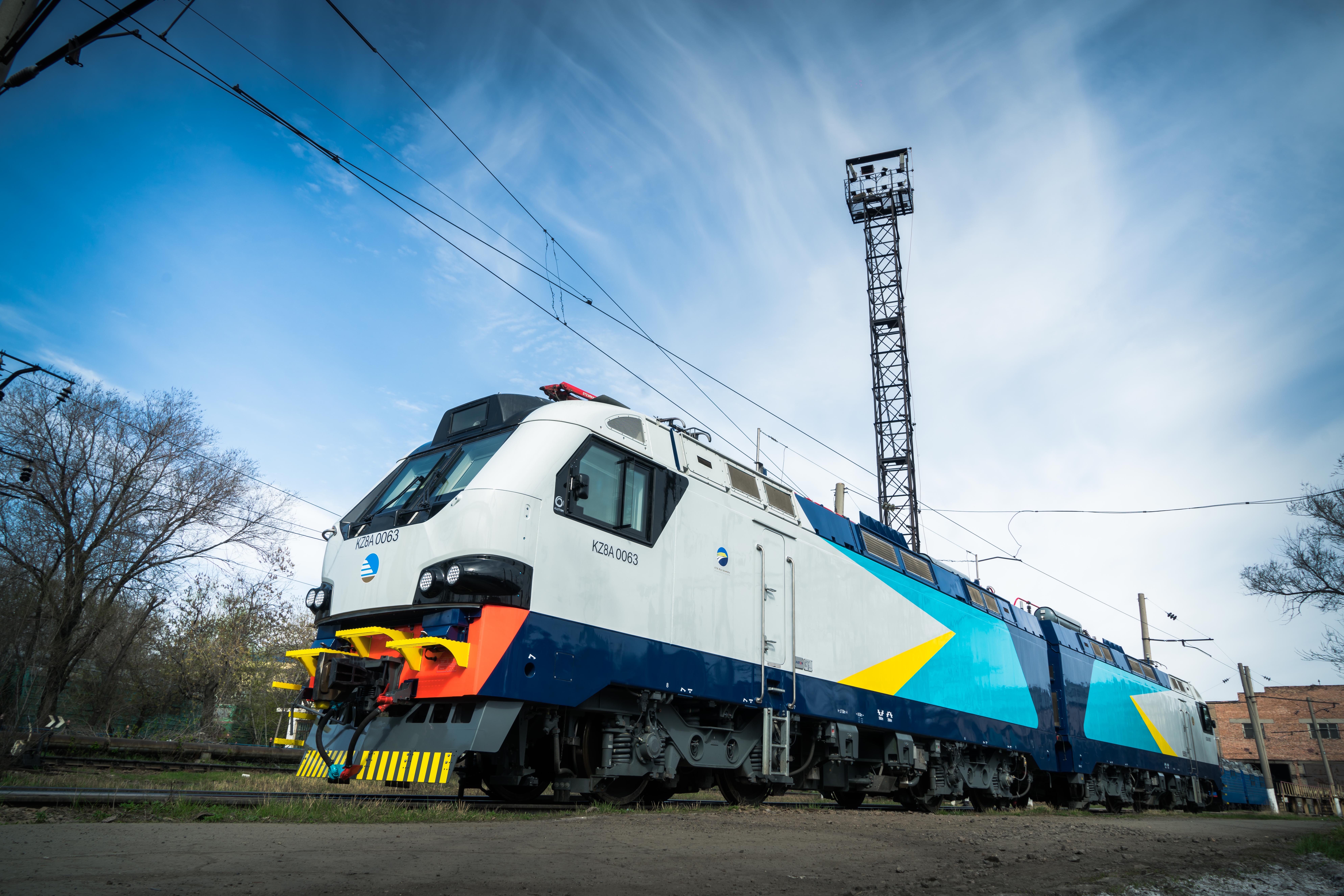
Photo credits: Alstom
Background
Logistics disruptions are affecting supply chains. The Middle Corridor is a multimodal trade route between Asia and Europe that carries consumer goods, agricultural commodities, and bulk goods. A critical link is the East–West railway line from Azerbaijan’s capital, Baku, to Boyuk-Kesik on the Georgian border, operated by Azerbaijan Railways (ADY). Key logistics challenges include infrastructure gaps (such as aging bridges and limited electrification), limited availability of rail slots and rolling stock, and customs delays. These issues are further exacerbated by climate hazards such as flooding, extreme heat, and snow, as well as the risk of earthquakes. Disruptions and delays raise ADY’s operating costs and affect workers, reduce Azerbaijan’s transit-trade revenues, and influence the supply and price of goods for customers and consumers.
What was done
To strengthen this link, Azerbaijan Railways (ADY) introduced the Railway Sector Development Program, financed by the Asian Development Bank (ADB). ADB’s loans initially supported improvements in financial and railway management, followed by a USD 47 million loan targeting digitalization, operational efficiency, resilience, and decarbonization.93 ADY is also progressively undertaking a major upgrade of the physical infrastructure along the link during 2020-2027, with multiple action measures that collectively enhance resilience while generating decarbonization and sustainability benefits.
- The first measure is a large-scale upgrade of the electric network, replacing the outdated 3 kV DC system with 25 kV AC. This reduces electricity losses, improves substation availability, and enables a better integration with the national grid, laying the foundation for more energy-efficient electric traction. Upgrading the final section of the link will be completed by 2027.
- Next, Alstom, a global rail transport manufacturer and ADY partner, supplied 40 modern electric freight locomotives (Alstom Prima T8 AZ8A), built in the region. These replaced roughly 100 locomotives from the Soviet era, many of which were more than 40 years old and often unavailable. The modern locomotives are more powerful, reliable and built for harsh climates (-25°C to +50°C). Regenerative braking further improves energy efficiency, and their modular design simplifies maintenance and reduces costs. The new locomotives were designed with the wellbeing and safety of drivers in mind: climate controlled cabins, ergonomic driver seats, and cooking and fridge facilities.
- Finally, operations are partly powered by renewable electricity. This was made possible through the installation of rooftop solar on locomotive depots under ADB loans, supplying both rail operations and the national grid. Further installation of solar along railway rights-of-way is also being investigated.
Value creation
The combined value from these parallel measures delivers a Triple Dividend of Resilience:
1. Avoided losses
- Infrastructure: fewer locomotive failures, with availability increasing from ~70% to ~90%.
- Operations: digitalized systems and processes reduce delays and improve reliability.
- Workforce: avoided productivity loss and safety incidents involving drivers and maintenance staff.
- Energy system: reduced risk of electricity network failures.
2. Induced economic benefits
- Reduced travel time, as average speeds doubled from ~20 km/h to ~40 km/h.
- Lower maintenance costs due to modular locomotives and fewer failures.
- Improved energy efficiency of locomotives and the electricity network.
- Higher transit-trade revenues for Azerbaijan and other countries along the Middle Corridor.
- More reliable services for companies shipping goods along the corridor.
- Increased freight volumes on the Middle Corridor (or specifically this rail segment) from under 800,000 tonnes (2019–2020) to more than 4.5 million tonnes (2024), with planning toward 10 million tonnes by 2027.
3. Social and environmental benefits
- Better working conditions for drivers and maintenance staff thanks to modern locomotives and fewer failures.
- Reduced greenhouse gas emissions and cleaner air from rail electrification combined with renewable electricity generation.
- Strengthened income resilience for workers and communities whose livelihoods depend on trade along the Middle Corridor.
Looking forward
Improvements to the Middle Corridor are set to significantly strengthen connectivity between Asia and Europe, lowering transport costs while boosting capacity. In an era of geopolitical uncertainty and frequent supply chain disruptions, this enhanced corridor has become especially valuable. Its successful upgrade not only demonstrates the viability of modernizing neglected routes, but also provides a model for reviving underinvested rail networks elsewhere, such as freight corridors in Africa. Since the improvements, freight volumes on the Middle Corridor have risen sharply, and its user base has expanded. In 2023, multinational shipping giant Maersk launched a dedicated service through the corridor, offering faster transit times between the Far East and Europe compared with traditional sea routes.94,95 The company has also extended this option to shippers in Japan and South Korea seeking more reliable access to European markets, as well as to exporters in the United States and Europe looking to reach Central Asia. Continued upgrades to the rail network and improved links to the port of Baku are expected to further strengthen multi-modal transport connectivity along this strategic route.