Part E. Case Studies
Community and business inclusion in building long-term resilience after floods in Germany
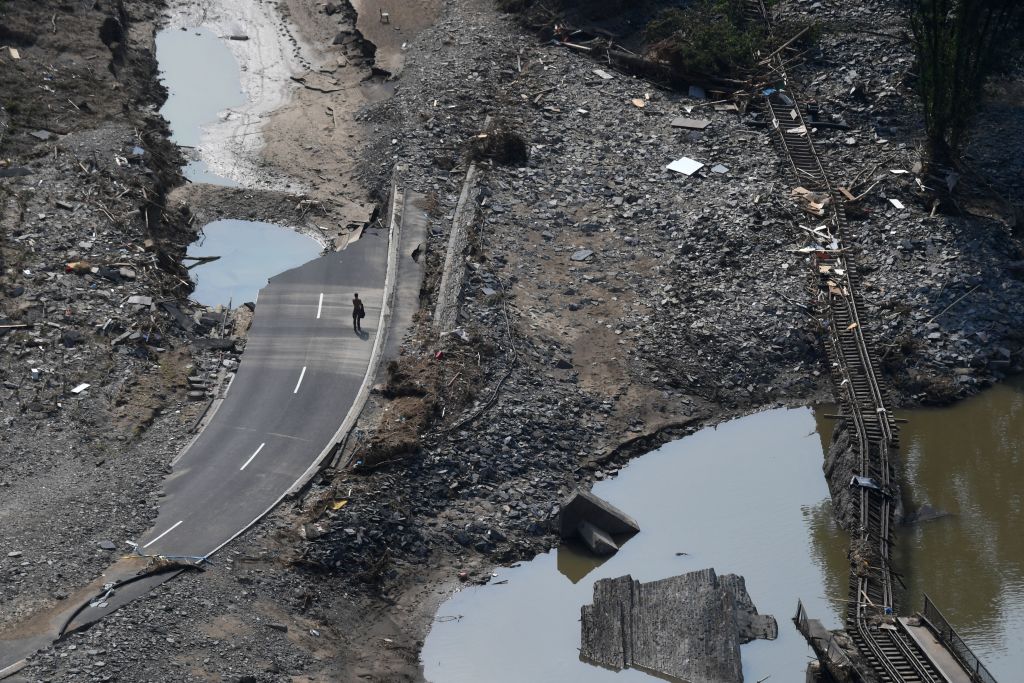
Reference: 83 84 85, Photo credits: Getty Images / Christof Stache
Background
In July 2021, devastating floods in Germany’s Ahr Valley killed more than 180 people and wiped out homes, businesses, transport infrastructure and power systems. Local industries – particularly wine production, agriculture, forestry, tourism and spa clinics – were heavily disrupted, and supply chains were cut off when roads, bridges, and rail lines were destroyed. The German federal government and the state of Rhineland-Palatinate launched a coordinated reconstruction plan that went beyond simple replacement of destroyed assets, focused on long-term climate adaptation with community participation and empowerment.
What was done & value creation
Community involvement. Residents, associations, and local businesses took part in forums and consultations on future land use, reconstruction priorities, and infrastructure needs. NGOs, citizen initiatives and volunteers supplemented government efforts, so that recovery priorities reflected both social and economic needs.
Long-term resilience. The floods triggered debate about whether to rebuild on a “like-for-like” basis or to incorporate long-term resilience. Several measures were adopted or piloted:
- Climate-adapted buildings: replacement of vulnerable oil-based heating in flooded basements with heating networks that reduce fossil fuel use and are less exposed to flood damage.
- Infrastructure upgrades: bridges and roads were reinforced and redesigned to withstand higher water levels and to reconnect cut-off areas more quickly in the future. This was critical for local supply chains, from moving goods to enabling staff and customers to access businesses.
- Integrated planning: reconstruction was linked to broader spatial and climate strategies to avoid recreating risk, for example, by avoiding the most flood-prone zones and aligning with climate and sustainability goals.
Looking forward
Despite successes, recovery was uneven, and pressure for fast “like-for-like” rebuilding often conflicted with resilience goals. Trust and legitimacy were improved in areas where participation was meaningful, but frustrations emerged where communities felt excluded or reconstruction was delayed. Still, the Ahr Valley shows how disasters can become a turning point. By connecting reconstruction to climate adaptation, infrastructure resilience, and business continuity, recovery can empower communities and economies that are better prepared for the next extreme event.