Part E. Case Studies
Digitizing coffee payments in Uganda: a logistics measure with multiple benefits
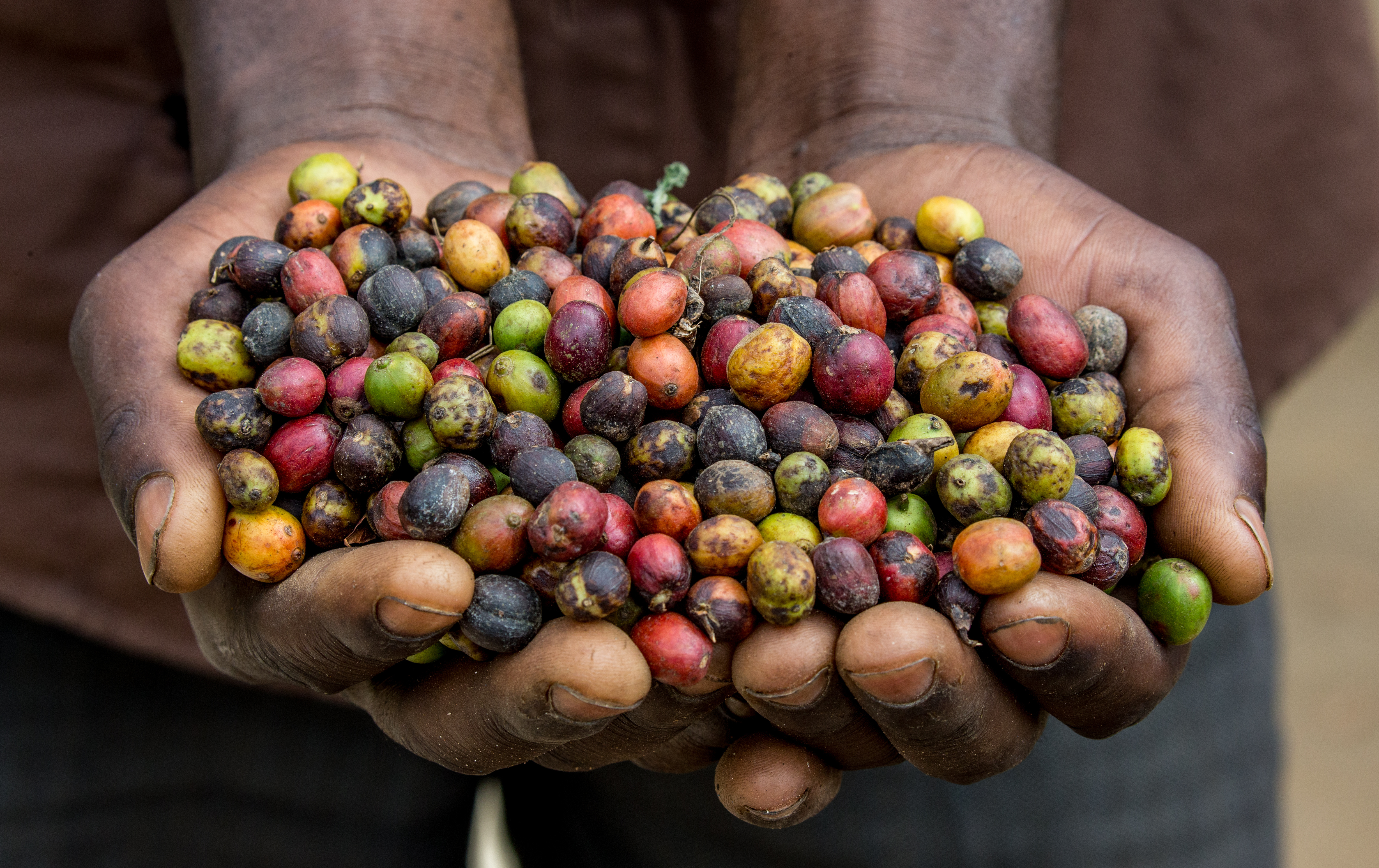
Reference: 82, Photo credits: iStock / Andrey Gudkov
Background
Physical cash payments were once a major bottleneck in Uganda’s coffee supply chain. Kyagalanyi Coffee Limited (KCL), one of the country’s largest exporters, had to transport cash across long distances to pay over 6,000 farmers and 900 traders, sourcing from about 50,000 smallholders. Cash was often carried in backpacks on boda-bodas or taxis, creating high risks of theft, delays, and significant transport-related emissions.
What was done
In 2015, the United Nations Capital Development Fund’s Mobile Money for the Poor (MM4P) programme partnered with KCL, MTN Uganda (telecoms company), and MicroSave Consulting to pilot digital payments in the Mount Elgon coffee value chain. The project replaced weekly road transport of cash with a bulk digital disbursement system. This involved building mobile network infrastructure, designing a payment platform, and onboarding more than 250 mobile money agents and 300 rural merchants. Donor grants of around USD 400,000 supported farmer education, agent recruitment, and pilot operations, while the Bill & Melinda Gates Foundation financed technical design. As confidence grew, MTN Uganda scaled up its commercial investment, and the approach expanded to other value chains such as fish, maize, tea, and dairy.
Value creation
Outcomes demonstrate strong resilience and sustainability value:
- 50,000 farmers gained faster, safer, and more transparent payments.
- Reduced theft and payment delays increased household stability and farmer trust.
- Financial inclusion improved as farmers used digital receipts to access credit and insurance.
- Cash-related GHG emissions were avoided by eliminating weekly motorbike and taxi trips to distribute cash.
- Private sector scale-up showed how donor de-risking can unlock lasting commercial engagement in rural markets.
Looking forward
The Ugandan coffee payments pilot illustrates how digital finance can be a logistics intervention. By removing the need for physical cash transport, it not only cut risks and costs but also strengthened the resilience of both farmers and supply chains. Digitization can be an opportunity for agricultural and other supply chains to improve resilience in a way that benefits farmers and their communities, companies, countries, and ultimately consumers.