Part E. Case Studies
Fictive examples of supply chain selections
Coffee supply chain
A coffee trader aims to improve the resilience of its supply chain from Colombia, Uganda, or Indonesia to Europe as part of broader efforts to secure a more consis- tent supply, given the climate sensitivity of coffee cultivation. While the trader already works with farmers to increase yields and use beans more resilient to higher temperatures and diseases, it has not yet addressed the first mile that connects farms to ex- port hubs, which is vulnerable to delays and disruptions. An insurer is interested in the same sector because coffee production is concentrated in a few regions, and therefore disruptions can lead to large claims associated with busi- ness interruption, property loss, and liability. The Uganda–Europe supply chain for Arabica coffee is assessed first due to its trade volume, revenue importance, and the vulnerability of Arabica plantations to climate impact. (Photo credits: stockmedia.cc)

Consumer goods supply chains through a trade corridor
Countries along the Middle Corridor (also known as the Trans‑Caspian International Trans- port Route), which connects Asia to Europe, seek to enhance the resilience of this multimodal trade route for containerized manufactured and consumer goods, including electronics, garments, parts, and machinery. In addition to cross‑border customs procedures, delays arising from the Caspian Sea ferry crossing and the associated rail systems are undermining the corridor’s attractiveness. These delays are expected to be further exacerbated by climate‑related hazards. Several mobile phone and laptop manufacturers, which already have plans to decarbonize their logistics operations, see an opportunity to integrate resilience and adaptation measures. The supply chains of these products are selected for assessment so that companies are involved from the start. (Photo credits: stockmedia.cc)

Textiles and apparel supply chain
A charitable foundation active in the fashion sector has worked to improve climate resilience and reduce emissions at textile and apparel factories and workshops in Bangladesh. It is now exploring expansion into the transport and logistics segments of supply chains from Bangladesh to Europe and North America, particularly as climate change, geopolitical tensions, and other hazards increasingly disrupt supply chains and drive up costs, leading to reduced incomes for garment workers and for Bangladesh as a whole. The Bangladesh to UK supply chain is chosen because of collaboration opportunities under the UK Textiles Pact, a voluntary agreement with over 130 signato- ries focused on sustainable and circular supply chains. (Photo credits: Unsplash / Parker Burchfield)

Multiple supply chains through a port
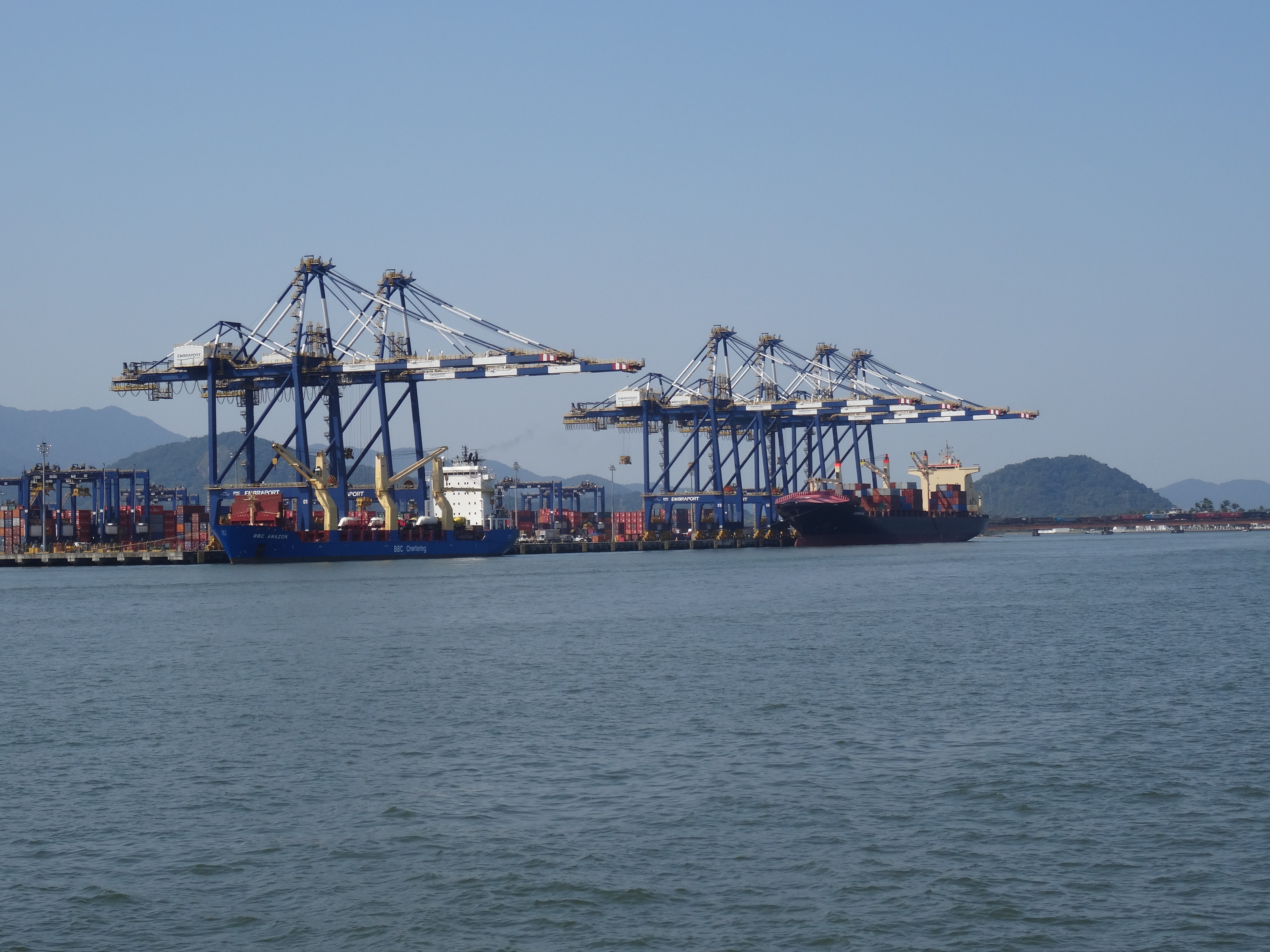
The Port of Santos in Brazil has completed a climate risk assessment conducted by the Brazilian government in colla- boration with a development agency. To secure investments for a range of adaptation measures, it seeks to leverage support from companies involved in the export of goods such as soy products, coffee, sugar, orange juice, meats, and automotive parts, as well as the import of chemicals, machinery, electronics, wheat, and petroleum products. The soy product supply chain from Brazil to China is selected for primary analysis because soy products account for 20-30% of the port’s export volume, with about 73% going to China. (Photo credits: Sophie Punte)
Pharmaceutical supply chain
Multiple producers of pharma- ceutical ingredients and generic medicines are co-located in a designated Bulk Drug Park in the Indian state of Andhra Pradesh to boost self-sufficiency and expand exports. Realizing this potential requires investment in cold-chain systems and improved rail and road links to Visakhapatnam port, designed to withstand growing climate impacts. The Indian and state governments are engaging global pharmaceutical firms and development banks to attract long-term investment and exper- tise. The supply chain to the US was selected as the primary focus, as India aims to strengthen its role as a key supplier of pharmaceutical products to the United States as the world’s largest pharma- ceutical market, home to more multinationals, and governed by a unified regulatory framework.

Critical materials supply chains
The European Union works to secure alternative sources of graphite for lithium-ion battery production as part of the Global Gateway. The Tanzanian govern- ment aims to strengthen road network resilience to safeguard household access to goods and the interests of international buyers using Tanzania and the Port of Dar es Salaam. All stake- holders depend on the same East African transport corridors. A European commodity trader and a Tanzanian firm have formed a joint venture to advance large- scale graphite production for use in electric vehicle batteries. A partnership between Tanzania and the EU will focus on developing resilient graphite supply chains to Europe, whose routes overlap with vital national supply chains in both countries. (Photo credits: Unsplash / Ra Dragon)